

Services / Power plants
Water reuse for power plants.
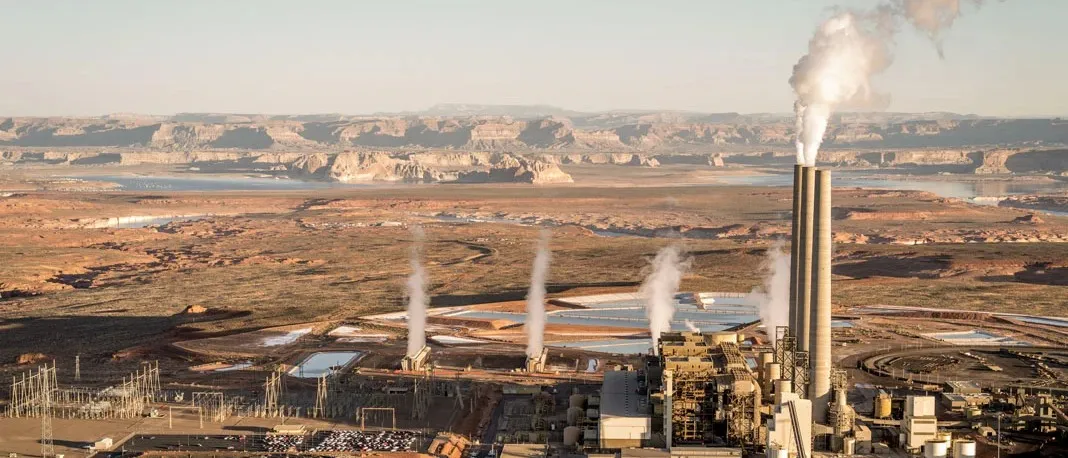
Power demand is rising, including from the data centers now competing for grid capacity, and plants are running harder to meet it. PWR recovers clean water from evaporation ponds and other on site streams at generating stations, and returns it for reuse within the plant. It eases water disposal capacity, reduces freshwater use, and keeps units running when disposal capacity would otherwise constrain operations.
PWR provides
Evaporation pond recoveryMobile treatmentConcentrate reductionOn site deploymentModular systems
01 / The challenge
Full ponds slow the plant down.
Power demand is climbing, driven in part by the data centers now competing for grid capacity. Plants are being asked to run harder and longer to meet it.
Running harder fills evaporation ponds faster than they were sized for. Disposal capacity becomes the limit on how much the plant can generate, not the equipment.
Many generating stations face tightening water disposal capacity. Evaporation ponds fill, trucking and disposal costs rise, and permit limits keep dropping.
Recovering pond and process water for reuse relieves that pressure, reduces freshwater use, and keeps units running when disposal capacity would otherwise constrain operations.
02 / The service
A mobile treatment system, operated as a service.
PWR deploys a mobile, modular treatment system that recovers clean water from evaporation ponds and other challenging streams for reuse within the plant. It handles high salinity, complex chemistries that conventional systems cannot, at a lower overall cost than trucking or disposal.
It deploys in weeks, scales by adding containerized units, and demobilizes when it is no longer needed. PWR provides the treatment performance data a facility needs to support reuse approval with its state.


03 / How it works
From full pond to operating plan.
The same five steps for every site, in order, before the first module ships.
-
01 · Assess
Assess the site
Characterize the pond and other feed water on site, the discharge options, and the volume the plant needs to move.
-
02 · Balance
Define the water balance
Model pond inflow, evaporation, and how much of that water can be recovered and reused versus how much has to be disposed of.
-
03 · Design
Select the treatment train
Match pretreatment, membranes, and polishing to the feed chemistry, whatever the salinity or complexity.
-
04 · Deploy
Deploy in phases
Bring mobile treatment capacity online in weeks, scaled to the pond volume, without a permanent build.
-
05 · Operate
Operate for reliability
Monitor water quality and system performance continuously, and provide the data a facility needs for reuse approval.
04 / Why it works
What this does for the plant.
-
01 · Recovery
High recovery on tough water
Recovers a high fraction of high salinity, complex streams as reuse quality water, where conventional systems struggle.
-
02 · Deployment
Mobile and modular
Deploys in weeks and scales by adding units as needs grow. Nothing permanent is installed.
-
03 · Track record
Proven and safe
Field proven treatment with a clean safety record and third party safety prequalification.
-
04 · Economics
Lower cost, pay for results
Reduces trucking, disposal, and freshwater spend. The service is billed for water cleaned and removed, not for equipment purchased.
05 / Contact
Talk to an engineer.
Feed characterization, offtake, siting, or +PWR on an existing train. The first conversation is technical, not commercial.